
15 Best Puzzle Games for Android & iOS (2026)
The 15 best puzzle games for Android and iOS in 2026. From mind-bending illusions to relaxing organizers — the smartest games on your phone.
Puzzle games are the backbone of mobile gaming. They are the genre that works best on a touchscreen, the genre you can play in one-minute bursts or three-hour marathons, and the genre that has produced some of the most creative, beautiful, and genuinely mind-expanding games ever made. In 2026, the puzzle genre on mobile is stronger than ever — with games that bend reality, rewrite their own rules, and turn simple ideas into unforgettable experiences.
We tested over 150 puzzle games across Android and iOS to find the ones that truly stand out. Every game on this list was evaluated on five key criteria: puzzle design, originality, visual quality, replay value, and mobile optimization. Whether you want brain-melting logic, relaxing organization, or surreal adventures — this list has you covered.
Logic & Rule-Based Puzzles
1. Baba Is You

Baba Is You is not just a puzzle game — it is a complete reinvention of how puzzle games work. Created by Finnish developer Arvi Teikari, the game presents you with simple grid-based levels where the rules of each level are physical objects you can push around. "Baba Is You" means you control Baba. But push those word blocks apart and rearrange them into "Wall Is You" — and suddenly you are the wall. "Flag Is Win" means touching the flag wins the level. But change it to "Rock Is Win" and the solution transforms entirely.
This mechanic sounds simple but produces some of the most satisfying puzzle moments in gaming history. The game starts with gentle tutorials and gradually introduces new words, modifiers, and concepts that interact in increasingly complex ways. By the midgame, you are creating chain reactions of rule changes, stacking conditions, and breaking the game in ways that feel like genuine discoveries rather than predetermined solutions.
The mobile port is excellent. Touch controls work perfectly for the grid-based movement, and the pixel art style looks crisp on any screen size. There are over 200 levels plus community-created content, giving you dozens of hours of content. If you play one puzzle game this year, make it Baba Is You.
Key Features:
- Push words to change the rules of each level
- 200+ hand-crafted levels with escalating complexity
- Pixel art style that is charming and functional
- Community level editor extends replay value infinitely
- No hints system — every solution is earned through logic
- Works perfectly offline with no ads
Why Baba Is You Beats Other Logic Puzzles:
| Feature | Baba Is You | Sokoban | Stephen's Sausage Roll |
|---|---|---|---|
| Rule Manipulation | Yes (core mechanic) | No | No |
| Level Count | 200+ | Varies | 200+ |
| Mobile Port | Excellent | Good | No mobile |
| Difficulty Curve | Steep but fair | Moderate | Extremely hard |
| Originality | Revolutionary | Classic | Innovative |
Genre: Logic / Rule Manipulation | Price: Paid ($6.99) | Rating: 5/5
2. Chants of Sennaar
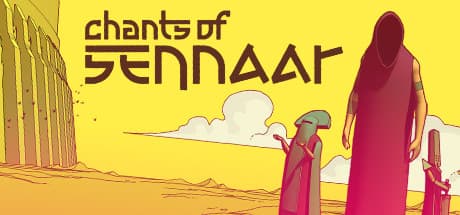
Chants of Sennaar is one of the most original puzzle games released in recent years. Inspired by the myth of the Tower of Babel, the game tasks you with deciphering fictional languages spoken by different civilizations living on separate floors of a massive tower. You do not have a dictionary. You do not have a translation guide. You observe, you listen, you take notes, and you gradually piece together meaning from context.
Each floor introduces a new civilization with its own visual style, culture, and language. The Devotees use flowing, circular glyphs. The Warriors use sharp, angular symbols. The Artists use expressive, gestural marks. As you progress upward, you begin to see connections between languages — shared roots, borrowed words, and cultural exchanges that tell a deeper story about communication and understanding.
The puzzle design is masterful. Every room, every interaction, and every sign is carefully placed to teach you something new about the language. The game respects your intelligence completely — there are no tutorials, no hint buttons, and no hand-holding. When you finally crack a sentence that has been puzzling you for an hour, the satisfaction is unmatched.
Key Features:
- Decipher multiple fictional languages through observation
- Stunning art style that changes with each civilization
- No tutorials or hints — pure deduction and discovery
- 10-15 hour campaign with rich narrative
- Built-in notebook for tracking translations
- Atmospheric soundtrack that shifts between floors
Genre: Language / Deduction | Price: Paid ($4.99) | Rating: 4.8/5
3. Brain Out

Brain Out takes a completely different approach to puzzles. Instead of logic, it tests your lateral thinking — your ability to look at a problem from unexpected angles. Each level presents what seems like a simple challenge: "Find the biggest number," "Count the triangles," "Tap the fruits in order." But the obvious answer is almost never correct. You need to think outside the box, interact with the screen in unexpected ways, and challenge your assumptions about how games work.
Some levels require you to move objects that seem like part of the UI. Others require you to use your phone's hardware — tilting the screen, adjusting volume, or even blowing into the microphone. The game constantly surprises you, and while some solutions feel unfair on the first attempt, most produce a genuine "aha!" moment that makes you appreciate the creativity behind each puzzle.
With over 300 levels and regular updates adding new content, Brain Out offers tremendous value for a free game. The difficulty varies wildly — some levels take seconds, others take minutes of frustrated experimentation — but the variety keeps things fresh.
Key Features:
- 300+ lateral thinking puzzles
- Uses touchscreen, motion, and hardware creatively
- Free to play with optional hint purchases
- Regular content updates with new levels
- Share and compare solutions with friends
- Quick play sessions — perfect for commuting
Genre: Lateral Thinking / Trick Puzzles | Price: Free | Rating: 4.3/5
Perspective & Spatial Puzzles
4. Monument Valley 3

The Monument Valley series has always been the gold standard for mobile puzzle games, and the third installment continues that legacy with its most ambitious and beautiful entry yet. You guide a character through impossible architecture — staircases that loop into themselves, platforms that exist in two places at once, and structures that transform when viewed from different angles. The game uses Escher-like optical illusions not as decoration but as the core puzzle mechanic.
Monument Valley 3 introduces new mechanics including water physics, seasonal changes, and collaborative puzzles where multiple characters must work together. The art direction is breathtaking — every screen is a painting, with color palettes that shift from warm sunset oranges to cool ocean blues as you progress through the story. The soundtrack is equally gorgeous, with ambient music that responds dynamically to your movements.
The puzzles are more accessible than hardcore brain-teasers, but the experience is no less rewarding. Monument Valley is about the journey — the wonder of exploring each impossible space, the satisfaction of discovering how pieces fit together, and the emotional resonance of the story being told through architecture rather than words.
Key Features:
- Escher-inspired impossible architecture puzzles
- Stunning art direction with dynamic color palettes
- New water physics and seasonal mechanics
- Collaborative puzzles with multiple characters
- Responsive ambient soundtrack
- 4-5 hour campaign with expansion content
Why Monument Valley Beats Other Spatial Puzzles:
| Feature | Monument Valley 3 | Mekorama | Lara Croft GO |
|---|---|---|---|
| Visual Quality | Masterpiece | Charming | Great |
| Puzzle Depth | Moderate | Moderate | Deep |
| Story | Emotional narrative | Minimal | Light |
| Originality | Pioneering | Inspired | Established |
| Replay Value | Moderate | High (editor) | Low |
Genre: Spatial / Perspective | Price: Paid ($4.99) | Rating: 4.9/5
5. Superliminal
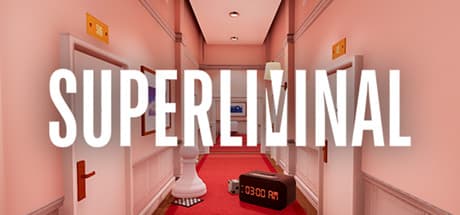
Superliminal is a first-person puzzle game built entirely around forced perspective — the optical illusion that makes objects appear larger or smaller depending on their distance from the viewer. Pick up a small chess piece and hold it up against a distant wall, and when you release it, the chess piece becomes the size of a car. Grab a tiny doorway, bring it close to your eyes until it fills the screen, and suddenly it is a full-sized door you can walk through.
This single mechanic produces an incredible variety of puzzles. Some rooms require you to shrink obstacles by viewing them from far away. Others require you to grow platforms by placing objects against specific backgrounds. The game constantly introduces new variations — shadows that become solid objects, reflections you can step into, and dream logic that defies everything you thought you understood about the rules.
The mobile port maintains the first-person controls effectively, with intuitive touch-based movement and object interaction. The game runs smoothly on modern phones, and the surreal visual style actually benefits from being played on a smaller screen — the perspective illusions feel even more convincing when they fill your entire field of view.
Key Features:
- Forced perspective as a core puzzle mechanic
- First-person exploration with touch controls
- 3-4 hour campaign with increasing complexity
- Surreal dream-like environments
- Mind-bending "aha" moments in every level
- Philosophical narrative about perception and reality
Genre: First-Person Perspective | Price: Paid ($5.99) | Rating: 4.7/5
6. Mekorama
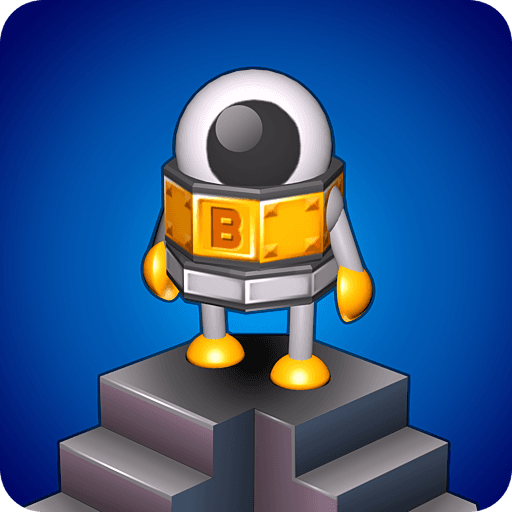
Mekorama is a puzzle game where you guide a tiny robot through miniature diorama-like levels built from colorful blocks. You tap to set a destination, and the robot walks there — if a path exists. Your job is to rotate platforms, activate switches, and manipulate the environment to create a route from start to finish. Think of it as a three-dimensional maze with moving parts.
What makes Mekorama special is its charming presentation and its community. The levels are gorgeous — tiny, detailed worlds that look like physical toys you could hold in your hand. The robot has personality through its animations, stumbling over edges and celebrating when it reaches the goal. The level editor allows players to create and share custom levels, and the community has produced thousands of brilliant puzzles that rival the official ones.
The game is completely free with no ads and no in-app purchases. The developer asks for a voluntary donation if you enjoy the game — a refreshing model that has earned enormous goodwill. With 50 official levels and unlimited community content, Mekorama offers incredible value.
Key Features:
- 50 official levels plus unlimited community levels
- Charming diorama art style with a lovable robot
- Built-in level editor for creating and sharing
- Completely free — no ads, no IAPs
- Intuitive tap-to-move controls
- Works perfectly offline
Genre: Spatial / Diorama | Price: Free (pay what you want) | Rating: 4.6/5
Adventure Puzzles
7. The Room: Old Sins

The Room series has been the benchmark for tactile puzzle gaming on mobile since 2012, and Old Sins is the best entry yet. You explore a mysterious dollhouse in the attic of a missing engineer, where each room contains intricate mechanical puzzle boxes that hide dark secrets. You slide panels, turn gears, peer through lenses, and manipulate beautifully crafted contraptions to uncover the story of what happened.
The touch controls are the star. Every interaction feels physical — you actually turn keys by rotating your finger, slide bolts by dragging, and spin dials by twirling. The haptic feedback on modern phones makes the experience even more immersive. The attention to detail in every object is remarkable — wood grain, metal scratches, glass reflections — everything looks and feels like a real physical artifact.
Old Sins innovates by letting you zoom into the dollhouse rooms, each one becoming a full-sized environment to explore. The puzzle design is layered — solving one mechanism reveals components needed for another, creating satisfying chains of discovery. The atmosphere is dark and mysterious, with an unsettling narrative that unfolds through letters, photos, and cryptic clues.
Key Features:
- Tactile puzzle boxes with realistic touch interactions
- Dollhouse structure connecting multiple puzzle rooms
- Stunning 3D graphics with photorealistic materials
- Dark atmospheric narrative with mystery elements
- 4-6 hours of content with no filler
- No ads, no IAPs — premium experience
Genre: Tactile / Mystery | Price: Paid ($4.99) | Rating: 4.9/5
8. There Is No Game: Wrong Dimension
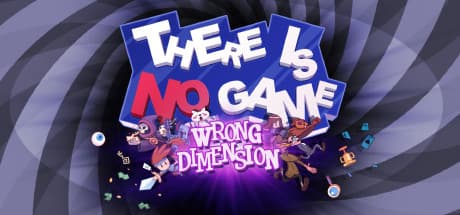
There Is No Game starts by telling you, very firmly, that there is no game here. Please go away. Stop clicking things. Why are you still here? This is not a game. But of course, it is a game — and your job is to break it. You tap, drag, swipe, and interact with everything on screen — including the UI itself. Menu buttons become puzzle elements. Error messages contain clues. The narrator actively fights against you, trying to prevent you from playing.
The game is structured as a series of genre parodies. One chapter is a point-and-click adventure. Another is a Zelda-like RPG. A third is a visual novel. Each chapter uses its genre's conventions as puzzle material — you solve problems by exploiting game mechanics, breaking the fourth wall, and doing things the narrator explicitly tells you not to do.
The humor is genuinely funny, the puzzles are creative and surprising, and the meta-narrative about what makes a game a game is surprisingly thoughtful. The mobile version works beautifully — the tap-and-drag interactions feel natural on a touchscreen, and many puzzles are designed specifically around mobile interface elements.
Key Features:
- Fourth-wall-breaking meta puzzle adventure
- Multiple genre parodies with unique mechanics
- Witty narrator who fights against your progress
- 6-8 hours of creative, surprising puzzles
- Mobile-optimized touch interactions
- Genuine laugh-out-loud humor throughout
Genre: Meta / Point-and-Click | Price: Paid ($4.99) | Rating: 4.8/5
9. Lara Croft GO
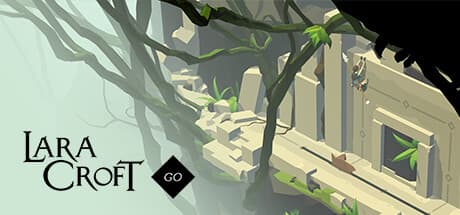
Lara Croft GO takes the iconic Tomb Raider franchise and distills it into a turn-based puzzle game on an isometric grid. You move Lara one tile at a time through ancient ruins filled with deadly traps, crumbling floors, giant spiders, and environmental hazards. Each level is a puzzle — you need to figure out the correct sequence of moves to reach the exit while avoiding danger and collecting relics.
The game introduces enemies and mechanics gradually. Snakes strike in a straight line when you stand in front of them. Lizards mirror your movements. Boulders roll when triggered. Crumbling floors collapse after one step. These simple rules combine to create increasingly complex puzzles that require careful planning and spatial reasoning.
The visual design is gorgeous — low-poly environments bathed in atmospheric lighting that shifts from golden desert tombs to dark underwater caves. The animations are smooth and satisfying, with Lara performing fluid takedowns and acrobatic maneuvers that make you feel like a puzzle-solving action hero.
Key Features:
- Turn-based puzzle gameplay on isometric grids
- 115 levels across 5 chapters plus expansions
- Beautiful low-poly art with atmospheric lighting
- Gradually escalating enemy and trap mechanics
- Collectible relics unlock bonus outfits
- Works fully offline with no ads
Genre: Turn-Based / Strategy Puzzle | Price: Paid ($4.99) | Rating: 4.7/5
10. Hitman GO

Hitman GO reimagines the stealth action franchise as a board game. Each level is a diorama with fixed paths, and you move Agent 47 one node at a time, trying to reach the target while avoiding guards. Guards follow set patrol patterns — some move when you move, some stay stationary, some reverse direction. You need to study the patterns, find the gaps, and plot the perfect route.
The presentation is what elevates Hitman GO from good to great. Every level looks like a physical board game — the characters are detailed figurines, the environments are miniature models, and successful takedowns snap enemies off the board like chess pieces. It is a stunning visual concept that makes every level a joy to look at.
The puzzle design is tight and satisfying. Each level has multiple objectives — complete the level, complete it in a limited number of moves, and collect a briefcase hidden in a tricky location. Pursuing all three objectives dramatically increases the challenge and replay value.
Key Features:
- Turn-based stealth puzzles on board game-style grids
- 91 levels across 7 chapters
- Gorgeous diorama presentation with figurine characters
- Multiple objectives per level for replay value
- Guard patrol patterns create strategic depth
- Premium experience — no ads, no energy system
Genre: Turn-Based / Stealth | Price: Paid ($4.99) | Rating: 4.6/5
Relaxing & Cozy Puzzles
11. Unpacking
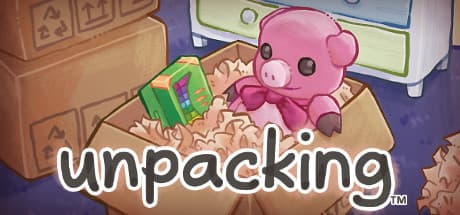
Unpacking turns the mundane act of unpacking boxes after moving into a meditative puzzle experience. Each level presents you with a new living space — a childhood bedroom, a college dorm, a first apartment, a shared house — and boxes full of belongings. You unpack each item and find the right place for it. A toothbrush goes in the bathroom. Books go on a shelf. A stuffed animal goes on the bed.
The genius is in the storytelling. Without a single word of dialogue, Unpacking tells a deeply personal story through objects. You notice changes — new items appearing as life progresses, old items being packed away, a partner's belongings mixing with yours, familiar objects that follow from childhood to adulthood. By the final level, you feel like you know this person intimately, all from placing their belongings.
The puzzle element is gentle. Most items have multiple valid placements, but some require specific locations. The game never punishes you harshly — it simply highlights items that are not quite right and lets you adjust. It is less about challenge and more about the satisfying feeling of creating order from chaos.
Key Features:
- Unpack belongings to tell a wordless story across life stages
- 8 levels spanning childhood to adulthood
- Pixel art with incredible attention to detail
- Relaxing ambient soundtrack
- 3-4 hours to complete at a leisurely pace
- Accessibility options for reduced challenge
Genre: Cozy / Organization | Price: Paid ($4.99) | Rating: 4.8/5
12. A Little to the Left

A Little to the Left is a cozy puzzle game about tidying up. Each level presents a messy scene — scattered pencils, unaligned books, tangled necklaces, mismatched socks — and you organize them into a satisfying arrangement. Sort buttons by size, align picture frames, stack plates by color, or arrange leaves by shape. The satisfaction of creating perfect order from mild chaos is the entire point.
What makes the game special is that most puzzles have multiple valid solutions. You might sort books by height, or by color, or by thickness — and all solutions are accepted. This encourages experimentation and lets you express your personal sense of order. A mischievous cat occasionally disrupts your work, batting items off surfaces and requiring you to adapt.
The hand-drawn art style is beautiful and warm, with a palette of soft pastels and earth tones that create a cozy atmosphere. The sound design is equally satisfying — items click and snap into place with gentle, tactile sounds that trigger a deep sense of satisfaction.
Key Features:
- 100+ tidying puzzles with multiple solutions
- Hand-drawn art style with warm color palette
- Mischievous cat adds unpredictable charm
- Satisfying sound design with tactile feedback
- Daily puzzles for ongoing content
- Hint system that preserves the challenge
Genre: Cozy / Organization | Price: Paid ($3.99) | Rating: 4.7/5
Number & Word Puzzles
13. Wordle
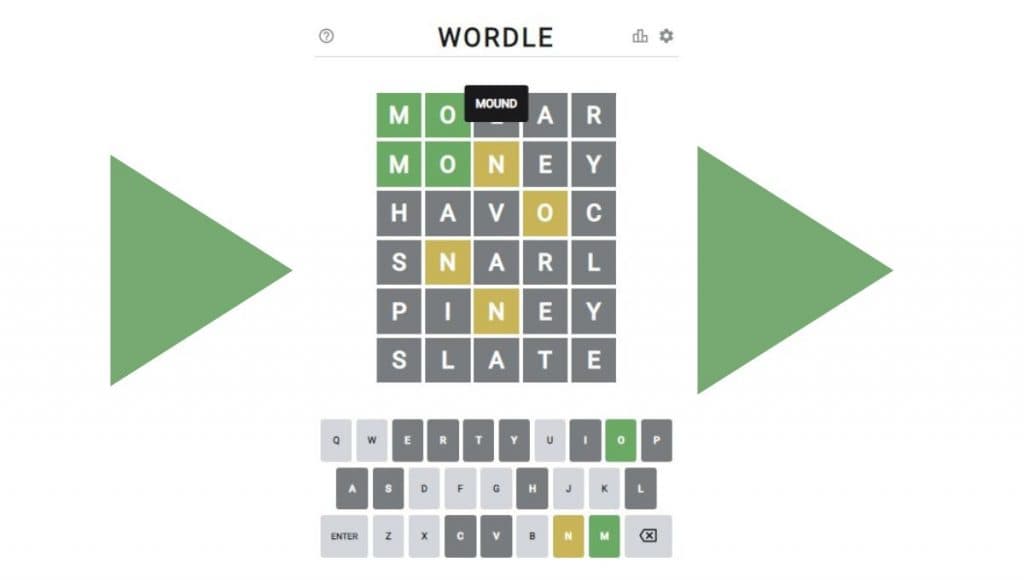
Wordle needs no introduction — it is the word game that took over the internet in early 2022 and has maintained its daily ritual status ever since. You have six attempts to guess a five-letter word. After each guess, letters turn green (correct position), yellow (wrong position), or gray (not in the word). The brilliance is in the constraint — one puzzle per day, no more. Everyone solves the same word, creating a shared daily experience.
The mobile version through the New York Times app is polished and clean, with support for streaks, statistics, and hard mode (where you must use confirmed letters in subsequent guesses). The game has evolved with themed variants — Wordle in other languages, longer words, and crossword-style grid variants.
Wordle succeeds because of its simplicity and its social nature. Sharing your result as a grid of colored squares (without spoiling the word) became a cultural phenomenon. The game proves that a great puzzle does not need hundreds of levels, flashy graphics, or complex mechanics — it just needs one perfectly designed challenge per day.
Key Features:
- One five-letter word puzzle per day
- Green/yellow/gray feedback system
- Streak tracking and performance statistics
- Hard mode for experienced players
- Shared daily experience across all players
- Clean, distraction-free interface
Genre: Word / Daily | Price: Free | Rating: 4.5/5
14. 2048

2048 is one of the most addictive number puzzles ever created. You swipe tiles on a 4x4 grid — all tiles slide in the same direction. When two tiles with the same number collide, they merge into their sum. Two 2s become a 4. Two 4s become an 8. The goal is to create a tile with the value 2048, but the real challenge is surviving as long as possible as the board fills up with tiles.
The strategy runs deeper than it appears. Experienced players learn to keep their highest tile in a corner, build chains of descending values along edges, and avoid moves that scatter large tiles across the board. The game rewards both pattern recognition and forward planning — every swipe affects the entire board, and one careless move can end a run that took thirty minutes to build.
2048 is completely free, works offline, and has no ads in most versions. The minimalist design — flat colors on a clean grid — is timeless. Despite being over a decade old, the game remains one of the most downloaded puzzle games on both platforms, and for good reason: the core mechanic is perfect.
Key Features:
- Slide and merge number tiles on a 4x4 grid
- Simple to learn, extremely difficult to master
- Minimalist design that never feels dated
- Completely free with no ads in original version
- Endless gameplay with score tracking
- Works offline — zero internet requirement
Why 2048 Beats Other Number Puzzles:
| Feature | 2048 | Threes! | Drop Number |
|---|---|---|---|
| Price | Free | Paid ($5.99) | Free |
| Depth | High | Very High | Medium |
| Sessions | 5-30 min | 5-20 min | 3-10 min |
| Ads | None | None | Frequent |
| Originality | Inspired by Threes | Original | Derivative |
| Accessibility | Very Easy | Moderate | Easy |
Genre: Number / Sliding | Price: Free | Rating: 4.4/5
15. Threes!

Threes! is the game that inspired 2048 — and many puzzle purists consider it the superior version. The core mechanic is similar: slide tiles on a grid to combine matching numbers. But Threes! adds crucial differences that create a deeper, more strategic experience. Tiles only move one space per swipe (not the entire row). The number 1 can only combine with 2 to make 3. Only matching numbers above 3 can merge. And new tiles appear from the edge you swiped away from, meaning you can predict and plan for incoming tiles.
These differences transform the game from a reactive luck-fest into a deeply strategic puzzle that rewards planning, spatial reasoning, and pattern recognition. Expert players can consistently reach high scores because the game gives you more control and more information than 2048. The skill ceiling is remarkably high — you can play for months and still discover new strategies.
The presentation is charming. Each number has a face and personality. The tiles chat with each other when they merge. The music is catchy and changes as your score increases. It is a premium game with no ads and no IAPs — you pay once and get the definitive version of this genre.
Key Features:
- Strategic tile-sliding with deeper mechanics than 2048
- Predictable tile spawns allow planning ahead
- Charming personality with animated tile faces
- Catchy dynamic soundtrack
- Premium game — no ads, no microtransactions
- Leaderboards and statistics tracking
Genre: Number / Strategy | Price: Paid ($5.99) | Rating: 4.7/5
Best Puzzle Games by Preference
Best for Mind-Bending Logic: Baba Is You — Rewrite the rules of reality to solve 200+ puzzles that will make your brain sweat in the best way possible.
Best for Visual Beauty: Monument Valley 3 — Every screen is a work of art, and the impossible architecture puzzles are as elegant as they are satisfying.
Best for Immersive Touch: The Room: Old Sins — The most tactile puzzle experience on mobile, with mechanical puzzles that feel real under your fingers.
Best for Laughs: There Is No Game: Wrong Dimension — A hilarious meta-puzzle that fights back when you try to play it.
Best for Daily Ritual: Wordle — One puzzle per day, shared by millions, with the perfect balance of challenge and accessibility.
Best for Relaxation: Unpacking or A Little to the Left — Cozy, meditative puzzle experiences that reduce stress instead of adding it.
Best Free Option: Brain Out or 2048 — Hundreds of puzzles without spending a cent.
Final Thoughts
The puzzle genre on mobile is in a golden age. From the rule-rewriting brilliance of Baba Is You to the architectural wonder of Monument Valley 3, from the tactile satisfaction of The Room to the meditative calm of Unpacking — there is a puzzle game for every mood, every skill level, and every taste.
What unites every game on this list is respect for the player. These games trust you to figure things out. They do not bombard you with tutorials, hint pop-ups, or pay-to-skip options. They present a challenge, give you the tools to solve it, and let you experience the incomparable satisfaction of that "aha!" moment when everything clicks into place.
The best puzzle games do not just pass the time — they expand the way you think. They teach you to see patterns, question assumptions, consider perspectives, and approach problems from angles you never considered. That is what makes this genre timeless, and why the 15 games on this list are worth every minute of your time.
Challenge accepted? Start with any game on this list and let your brain do the rest.